Readiness, Relevance, Relationships: SEEBRIG’s Message from Corfu
SEEBRIG's leadership joined the 56th PMSC and 55th SEDM-CC meetings in Corfu, Greece
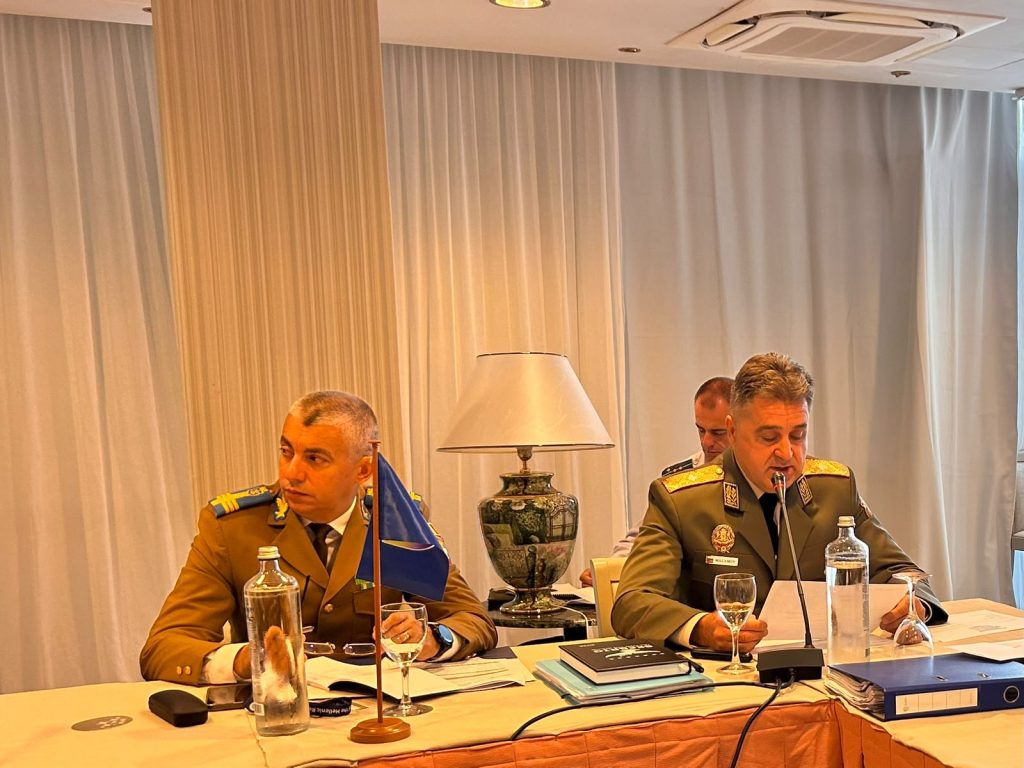
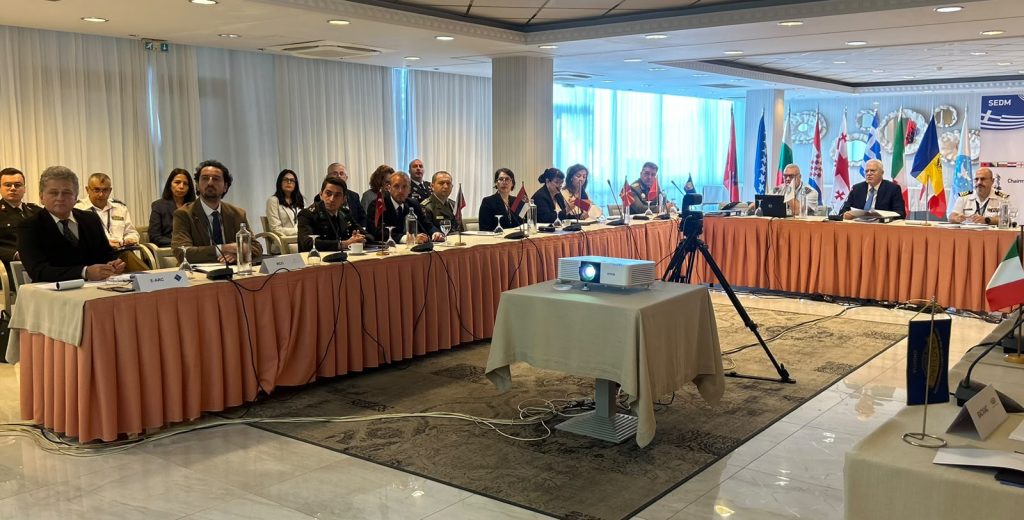
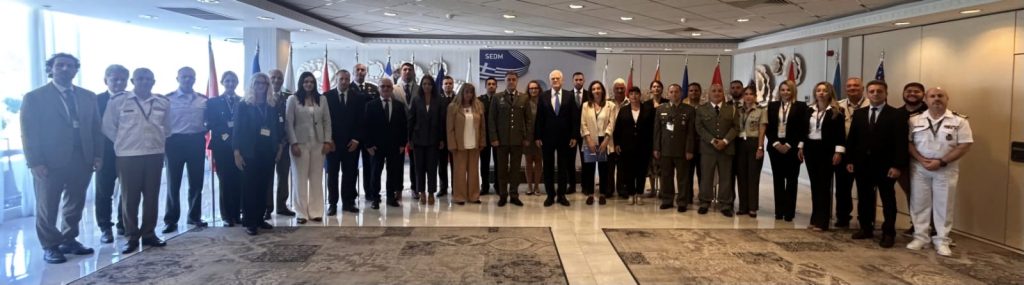
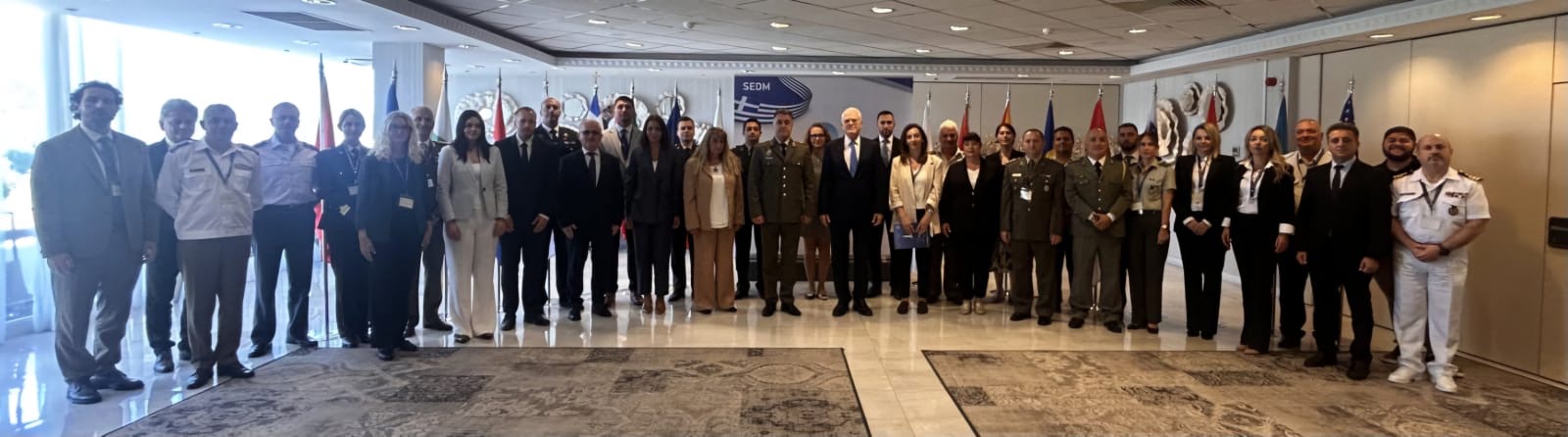
On 23 and 24 September 2026, the South-Eastern Europe Brigade (SEEBRIG) Headquarters (HQ) representatives took part in two consecutive gatherings in Corfu, Hellenic Republic: the 56th Politico-Military Steering Committee (PMSC) and the 55th South-Eastern Europe Defence Ministerial Coordination Committee (SEDM-CC). Representing SEEBRIG HQ were the Commander, the ADC, the Political Advisor (POLAD), the Legal Advisor (LEGAD), and the Deputy Chief of Staff for Operations (DCOS OPS), who together presented the Brigade’s record of the past year and its outlook for the one ahead.
For the Commander of SEEBRIG (COMSEEBRIG), Bulgarian Army Brigadier General (BG) Ivan MALAMOV, the Corfu meetings represented his first appearance before the Committee since assuming command in late August, following the Brigade’s HQ relocation from Kumanovo, North Macedonia to Istanbul, Türkiye. His presentation set out a clear frame for that first appearance: Readiness, Relevance, and Relationship building, the three principles he described as guiding SEEBRIG’s continued development, and which now anchor both the Brigade’s Vision and its Main Objectives for 2027.
A Year of Transition, Told Plainly
Much of the past year at SEEBRIG HQ was defined by dynamics and challenges rather than routine. The HQ closed its six-year chapter in Kumanovo, North Macedonia, in July 2026, relocated to Istanbul, Türkiye and marked its Activation and Change of Command Ceremony, as well as the 27th Anniversary there in late August. COMSEEBRIG walked the Committee through this transition in a frankly manner, acknowledging both what the Brigade accomplished under complex circumstances and what still demands attention, rather than an account that leaves out the year’s real challenges
“The Nations decide; SEEBRIG informs and executes.”
Charting the Year Ahead
Alongside the retrospective, BG MALAMOV presented SEEBRIG’s Annual Plan and Budget for 2027, together with the Medium-Term Financial Plan through 2031, all of which the Nations endorsed for submission to Ministers at the SEDM Ministerial Meeting in Bled, Slovenia.
Significant progress was made in the planning and preparation for Exercise Seven Stars 2027 (SEST27), a flagship initiative where SEEBRIG HQ will take full ownership of the entire operational cycle, including its planning, execution, and final evaluation.
Furthermore, a constructive proposal came from the Republic of North Macedonia to integrate the Balkan Medical Task Force (BMTF), which it currently hosts, into the exercise. This collaboration (which is still currently being analyzed) may mark a practical step forward, offering the opportunity to broaden the exercise’s operational scope, enhance the medical component of a Peace Support Operation, and foster deeper interoperability among regional partners in the year ahead.
By way of background, the upcoming Ex SEST cycle promises to be very robust and complex due to the recent relocation to Istanbul, Türkiye; the colocation with NATO Rapid Deployable Corps-Türkiye (NRDC-T) and the current position in a dynamic military hub may unlock generous access to specialized training centers located throughout the HN, such as the Multinational Joint Warfare Center (MJWC) in İstanbul.
A Shared Conversation on SEEBRIG’s Future
The Corfu meetings also served as a catalyst for a deeper, more forward-looking discussion on how to fundamentally enhance the strategic relevance and operational effectiveness of the Multinational Peace Force South-Eastern Europe (MPFSEE) initiative. Recognizing that the security landscape is rapidly changing, the Committee emphasized SEEBRIG’s urgent need to proactively adapt to a new and complex geostrategic environment. To remain a vital and resilient contributor to regional security, the initiative must align its capabilities with modern defense challenges. This involves modernizing its operational framework, expanding its strategic partnerships, and ensuring the Brigade is fully agile, responsive, and equipped to meet evolving security demands in the region.
A concrete proposal in this respect was tabled by the Republic of Bulgaria – an initiative that several Nations welcomed as a timely and constructive step. Further analyses are underway and comments, conclusions, and proposals are expected from the nations in the near future, which, alongside COMSEEBRIG’s own assessment of where the HQ stands and where it might be heading will set the table for the national stakeholders to decide the future direction for SEEBRIG.
The following day, the 55th SEDM-CC meeting placed this same conversation in its wider regional context. Taken together, the two meetings sent a consistent message: The Nations continue to regard SEEBRIG as a valuable and evolving instrument for regional security, one worth investing in, questioning, and, where needed, reshaping together.
A Command Looking Forward
In his closing remarks, BG MALAMOV reaffirmed that SEEBRIG HQ stands ready to implement the direction the Nations choose for the Brigade’s future, and thanked the Committee for its continued trust. The Chairman, Ambassador Eleftherios Anghelopoulos, in turn described SEEBRIG as a valuable asset and an efficient platform for cooperation among the Member Nations, and wished the new Commander success in the months ahead.
For SEEBRIG’s HQ staff, the Corfu meetings closed one chapter, a demanding period of relocation and transition, and opened another: a season of reflection, consultation, planning, and preparation. It is a season the COMSEEBRIG intends to meet the way it approached in Corfu: with readiness, proactive stance and with the openness towards building relationships with national, regional, and international partners in order to enhance the HQ strategic relevance and operational effectiveness and to prove that after twenty-seven years, SEEBRIG remains and efficient and enduring regional cooperation and stability asset.