Strengthening Operational Learning: SEEBRIG Deepens Cooperation with NATO JALLC in Lisbon
Lisbon, Portugal | April 2026
In a security environment defined by rapid geopolitical shifts and accelerating technological change, the ability to capture, analyze, and institutionalize operational experience has become a decisive factor in military effectiveness. Against this backdrop, the Headquarters (HQ) of the South-Eastern Europe Brigade (SEEBRIG) conducted a high-level visit to NATO’s Joint Analysis and Lessons Learned Centre (JALLC) in Lisbon, Portugal, reaffirming its commitment to enhancing interoperability and adaptive capability development.
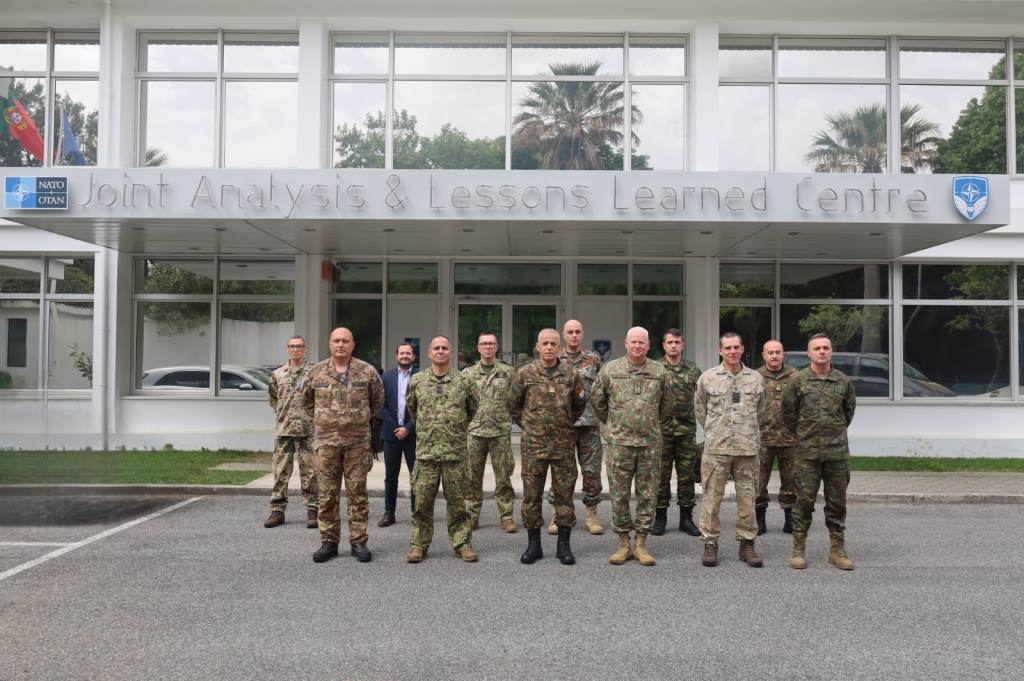
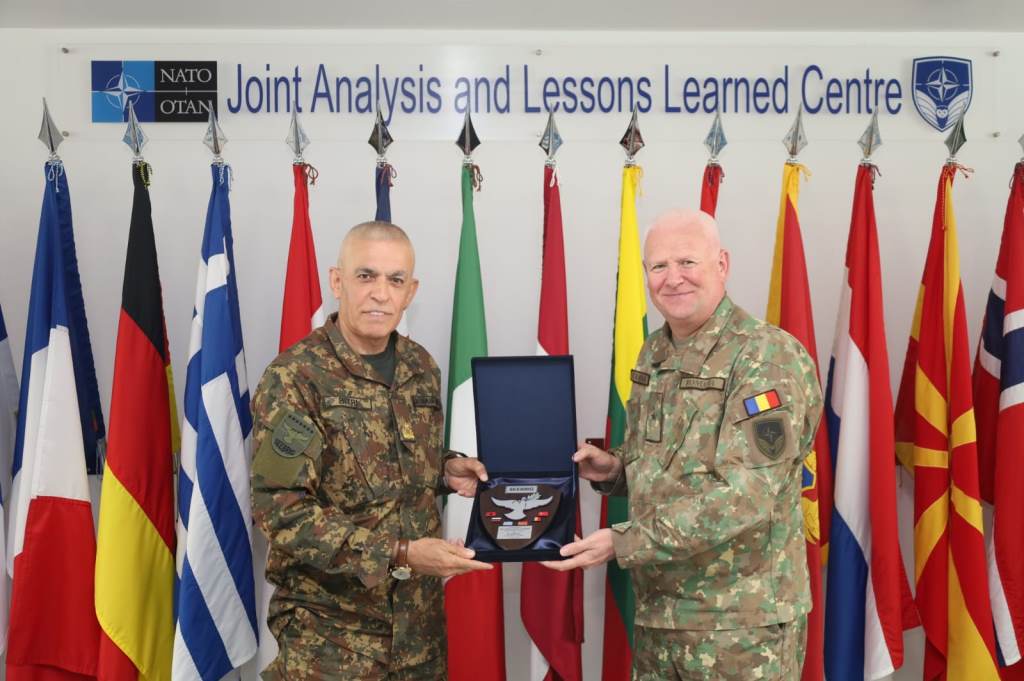
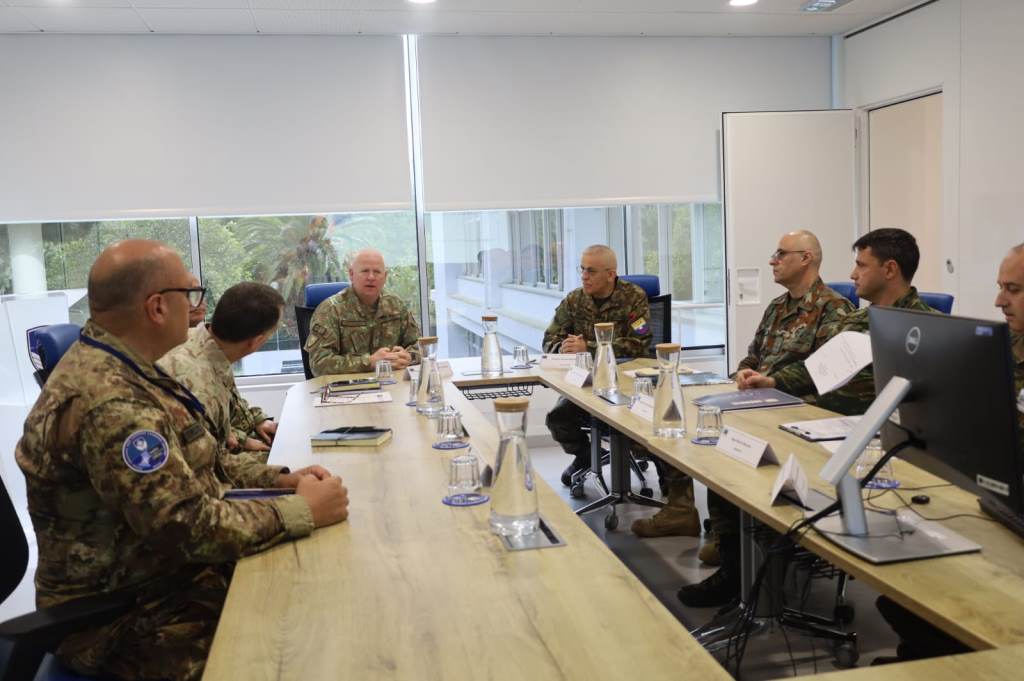
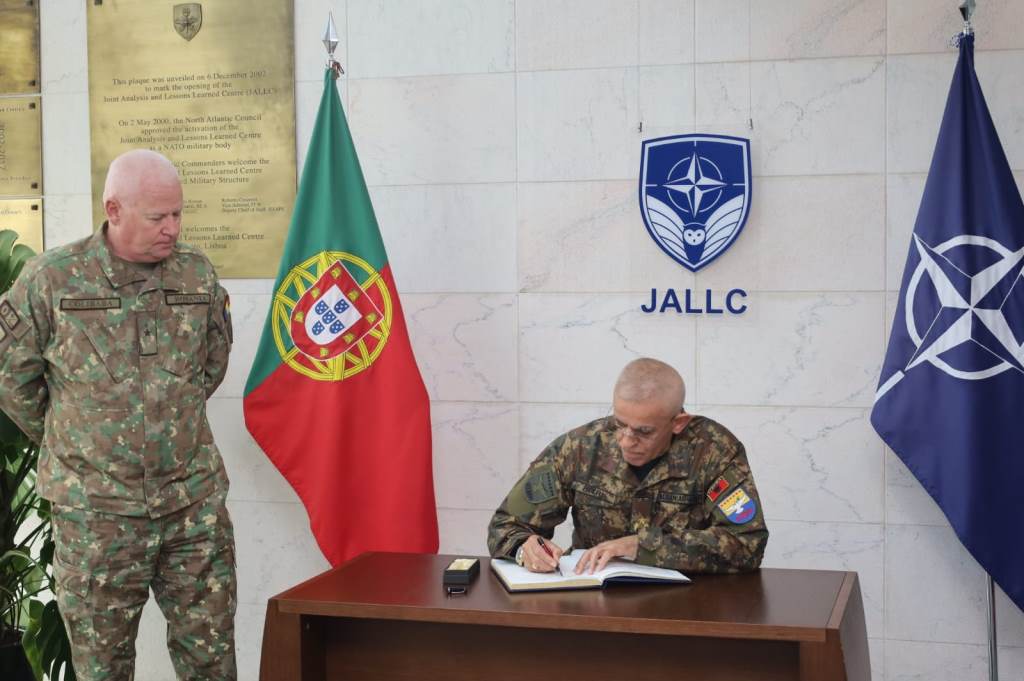
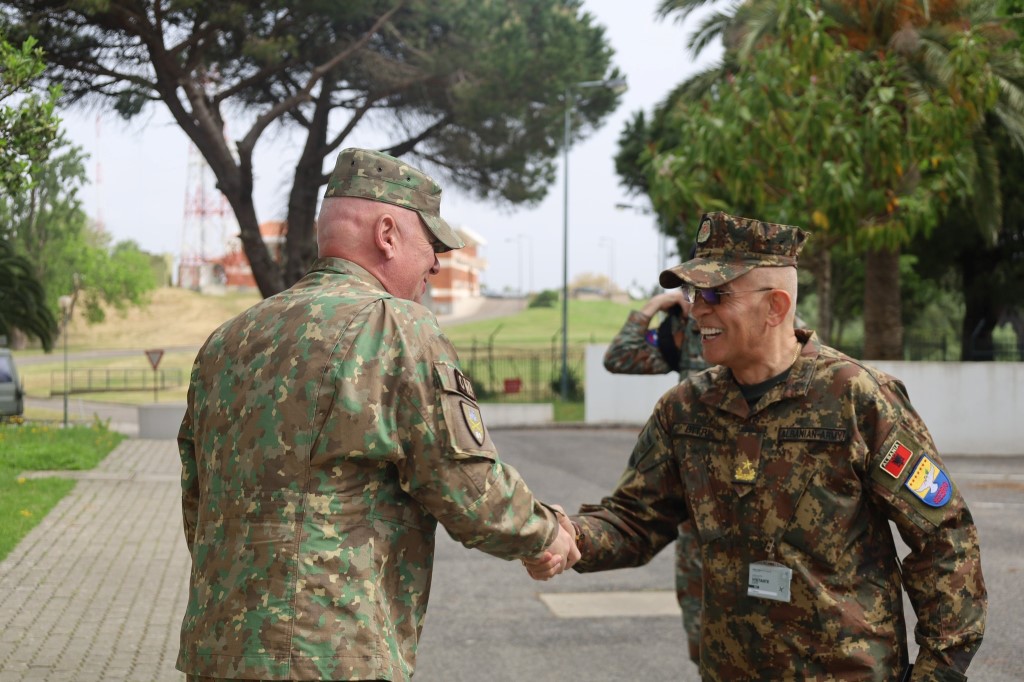
The SEEBRIG delegation, led by Commander SEEBRIG, Brigadier General Bilbil Bitri, visited JALLC on 21 of April 2026. The centerpiece of the visit was an official meeting held on 21 April at JALLC headquarters, where BG Bitri was received by the Commander of JALLC, Brigadier General Cristinel-Dumitru Colibaba, alongside the Chief of Staff, Colonel Nuno Lopes.
The visit set the tone for a substantive and forward-looking dialogue. Discussions focused on the critical role of the Lessons Learned (LL) process as a force multiplier in modern operations—enhancing mission effectiveness, reducing operational risk, and optimizing the use of limited resources.
Institutional Dialogue and Knowledge Exchange
Beyond the senior-level engagement, the visit included a comprehensive meeting between SEEBRIG staff and JALLC Heads of Branches. This interaction provided a platform for the exchange of best practices and operational insights, with particular emphasis on strengthening SEEBRIG’s internal LL processes.
Key areas of discussion included:
- The evolving relevance of SEEBRIG within the contemporary security environment;
- The institutionalization of LL processes as a core component of operational planning and execution;
- Opportunities for joint training, education, and capacity building;
- Mechanisms to overcome structural and technical barriers to deeper cooperation.
The agenda also featured formal briefings, analytical discussions with the JALLC Command Group, and a review of current methodologies employed by NATO in the LL domain.
Towards Enhanced Interoperability and Resilience
The visit highlighted the increasing importance of adaptive learning systems in modern military organizations. In an era where operational environments evolve faster than traditional planning cycles, the LL process serves as a critical enabler of institutional agility and resilience.
Both SEEBRIG and JALLC expressed a clear mutual interest in advancing cooperation, particularly in the areas of training, assessment, and analytical support. The engagement in Lisbon represents a concrete step toward bridging existing gaps and fostering a more integrated approach to operational learning.
The SEEBRIG visit to JALLC reflects a broader strategic effort to adapt to the demands of a rapidly changing security environment. By prioritizing the institutionalization of Lessons Learned processes and strengthening ties with NATO centers of excellence, SEEBRIG positions itself to remain a relevant and capable regional actor.
In the politico-military context, such engagements are not merely technical exchanges—they are strategic investments in collective security, operational credibility, and the shared objective of maintaining stability in South-Eastern Europe and beyond.