SEEBRIG HQ enhances regional cooperation in the training domain through its partnership with E-ARC
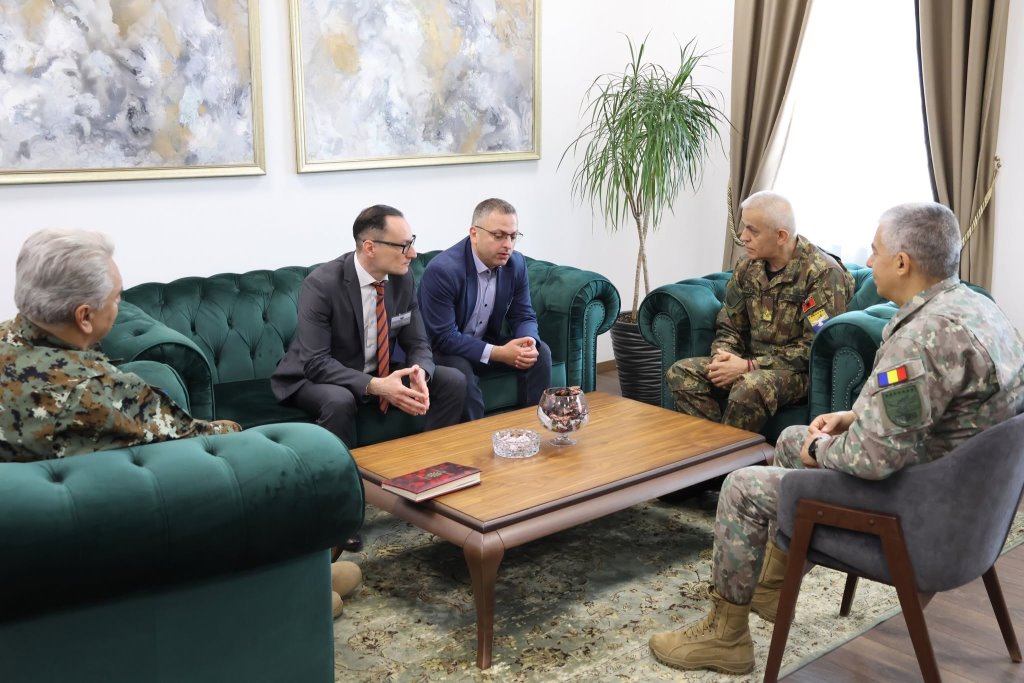
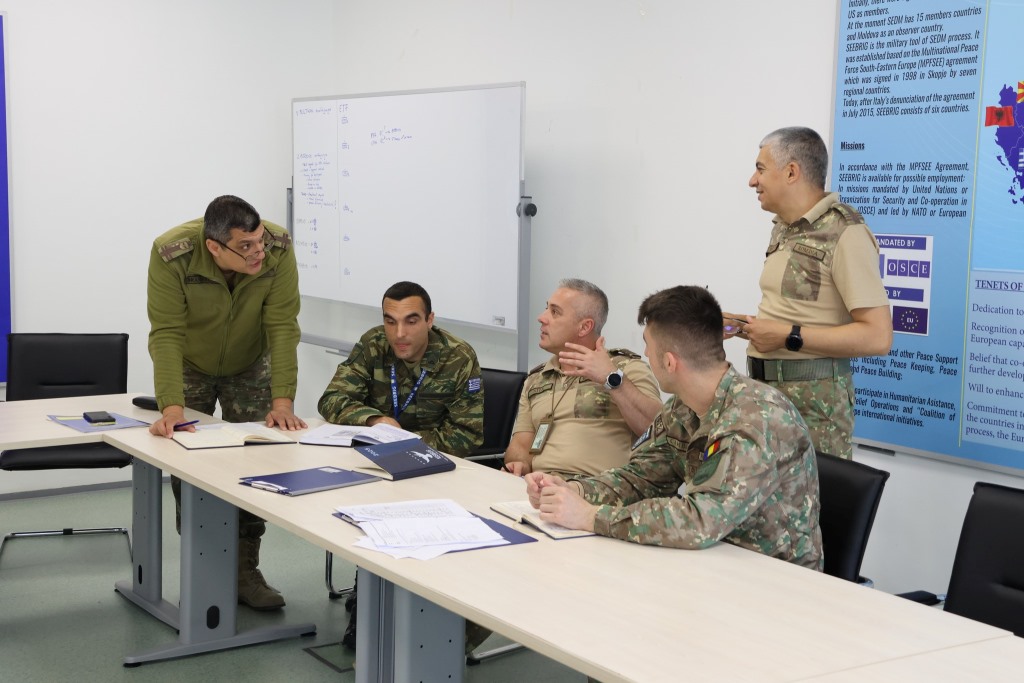
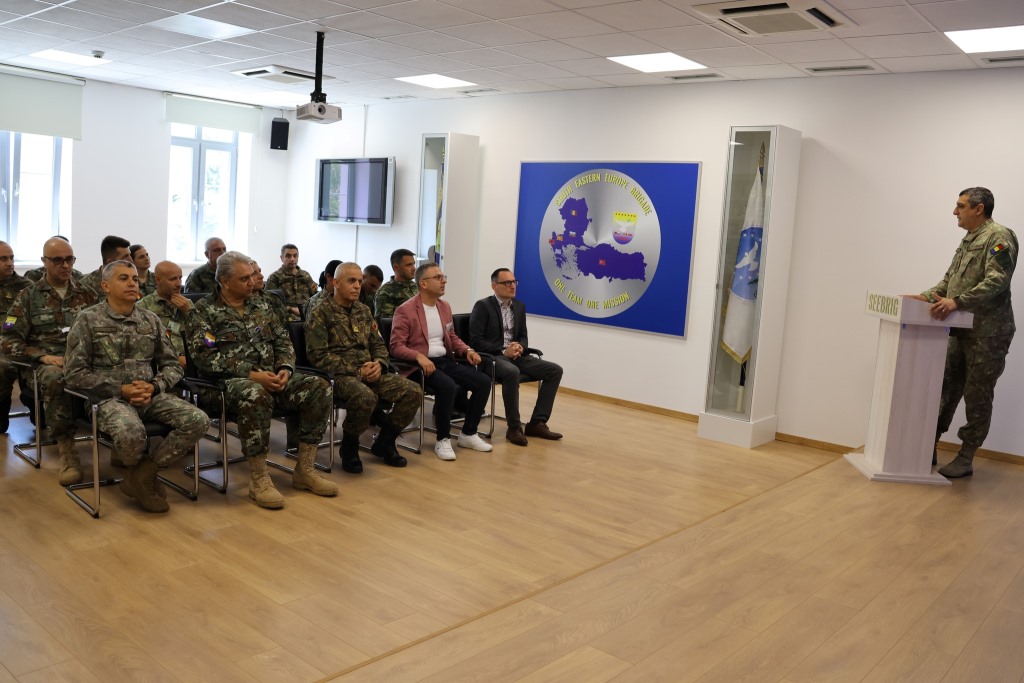
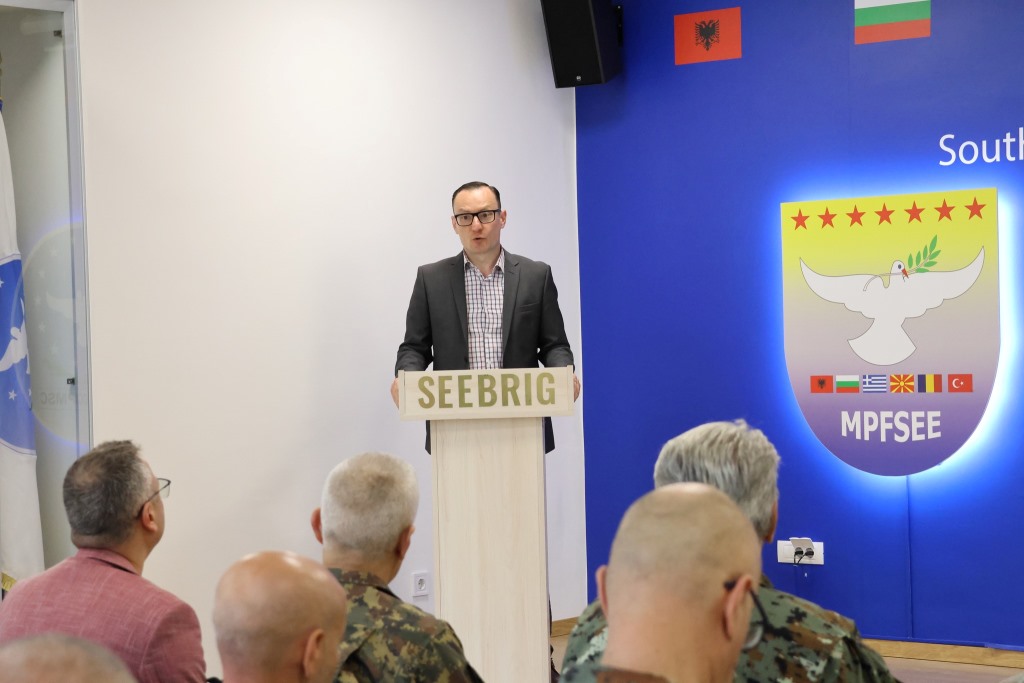
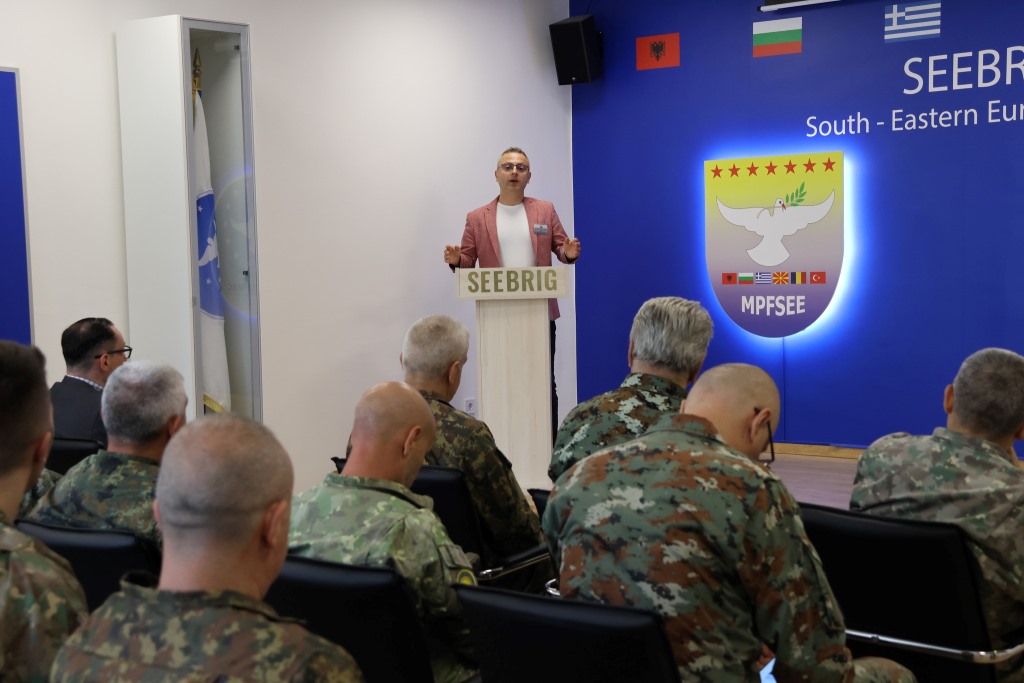
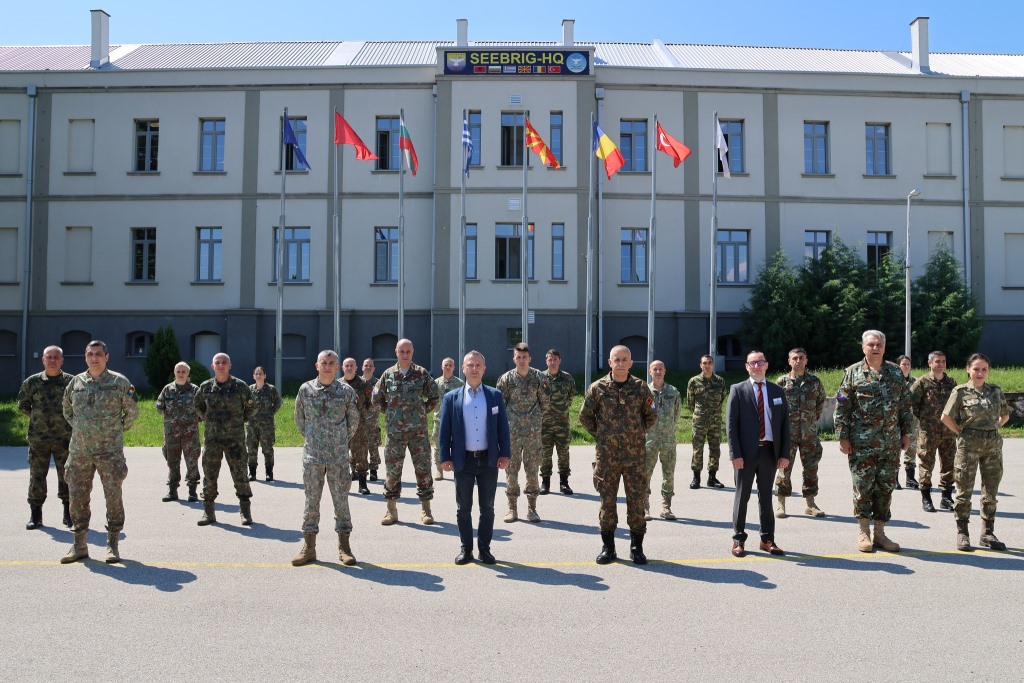
Between 26 to 28 May 2026, SEEBRIG hosted the “Societal Resilience and Civil-Military Interface in Peace Support Operations and Complex Operational Environments” training, organized in the HQ barracks in Kumanovo, North Macedonia by a Mobile Training Team (MTT) from the Euro-Atlantic Resilience Centre (E-ARC), from Bucharest, Romania, consisting of LTC Alexandru BELEA and Maj. Mihai DRAGOMIR.
During the three-day activity, 19 SEEBRIG staff members participated in the training aiming to enhance their knowledge and understanding of the resilience domain, civil-military cooperation, cultural synergy and trust capital, the continuity of essential functions in failing/fragile state, resilience of multinational forces in an AI enhanced environment and other connected concepts.
This represents the HQ’ first cooperation in the training domain with E-ARC, as SEEBRIG is keen on embarking on initiatives that enhance regional cooperation, professional development, and interoperability. In other words, this MTT should be the first step of a long journey of regional cooperation in an emerging, complex, and interdisciplinary domain.
SEEBRIG staff was introduces to the layered resilience model, and its importance to the correct and comprehensive understanding of the civil / operating environment:
- The societal layer is about people: how they react, how prepared they are, how much they trust instructions, how communities support each other, and how quickly fear or rumours spread.
- The civil layer is about authorities and systems: emergency services, public administration, infrastructure operators, hospitals, utilities, police, civil protection and local communication.
- The military layer is about the force: mobility, command and control, sustainment, liaison, security and possible support to civil authorities when requested and authorized.
Further on, the training module dedicated to the resilience of multinational forces i
n AI-enhanced and highly connected environments was of great interest for the SEEBRIG Staff. The concept is current and relevant, hence the high interest for how the AI (apart from being a powerful Force Multiplier) can also work against a Multinational Task Force, by greatly enhancing the hazards & risks of accidents & incidents to roll down with major negative cascading effects on the Force and the mission.
The comprehensive training experience was completed by a brief on climate, disasters, and resilience as well as a module focused on hybrid indicators, non-kinetic threats and psychological vulnerabilities, which provided SEEBRIG HQ with a good understanding of the hybrid threats and “equipped” the staff with a user-friendly multi-domain Hybrid Pressure Indicators matrix / Hybrid Threats Toolkit.
One of the main takeaways for SEEBRIG is the NATIONAL RESILIENCE ASSESSMENT (NRA) TOOLKIT, developed by the Euro-Atlantic Resilience Centre (E-ARC). The template preserves ad litteram the seven NATO Baseline Requirements for national resilience, while adding a distinct, transversal societal layer consistent with the NATO layered-resilience concept (LRC). Each detailed sheet combines baseline preparedness, current continuity, civil support to military operations, societal spillover, recovery/adaptation potential and inter-dependencies.
The NRA Toolkit has been designed as a useful component of the NATO Exercises Support Package, but the utility of such an evaluation tool encouraged SEEBRIG to try to expand and adapt the Toolkit in order to be used in Peace Support Operations’ (PSO) civil environment assessments. Furthermore, while the Resilience domain is a national responsibility, a resilience assessment tool can be very useful to SEEBRIG in Crisis Management and Disaster Response Operations, when / if tailored for this purpose.
Per the HQ Civil-Military Cooperation Section Head, LTC Branisteanu Mihail, Na-6 Army, the MTT was a cutting-edge mission-tailored training activity that E-ARC developed in support of SEEBRIG HQ. Due to the complex and continuously evolving concept of Layered Resilience, the training was extremely intense and challenging – but the SEEBRIG personnel performed very well in all tasks. Probably, the most remarkable achievement of the MTT was adapting / explaining the LRC to a Brigade HQ level, meaning shifting from broad societal and civil-military risk preparedness to localized, mission-command focus on anticipatory shock absorption, localized redundancy, and rapid recovery.
The MTT also enhanced SEEBRIG personnel’s understanding of NATO doctrinal concepts of layered resilience, hybrid threats, civil-military cooperation, and other connected domains, contributing to the HQ efforts for increasing readiness and interoperability.
While the Resilience domain can be considered an emerging field, there is and even more “cutting-edge” component of this training activity: TRANSPOSING the LRC to the tactical domain during a peace support operation; this required the ability to shift the focus from grand, whole-of-government frameworks to a localized, nimble framework where a brigade must absorb shocks without derailing the fragile political mandate. In other words, the E-ARC MTT successfully manage to adapt to the SEEBRIG training needs, the high-level political-military strategic pillars—societal, civil, and military preparedness—and compressed them into daily tactical reality of a PSO.
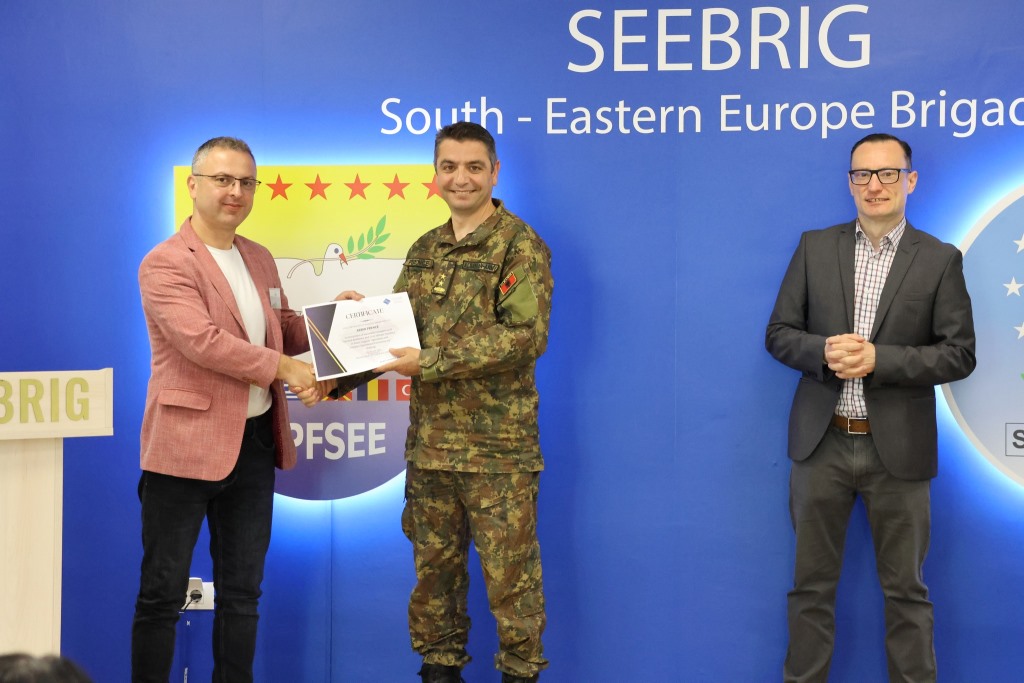
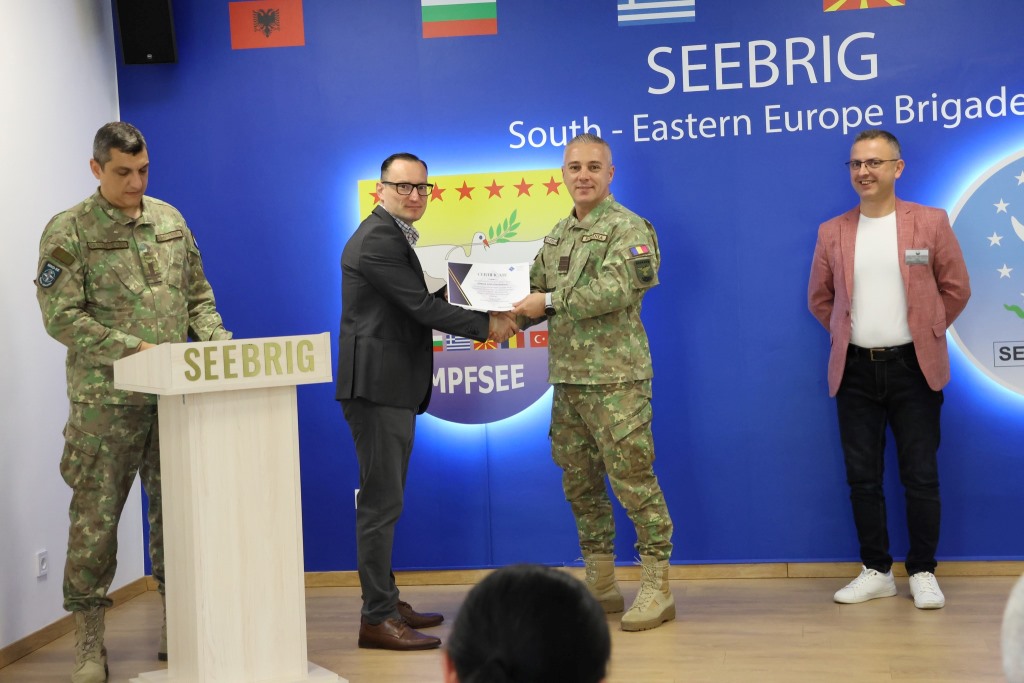
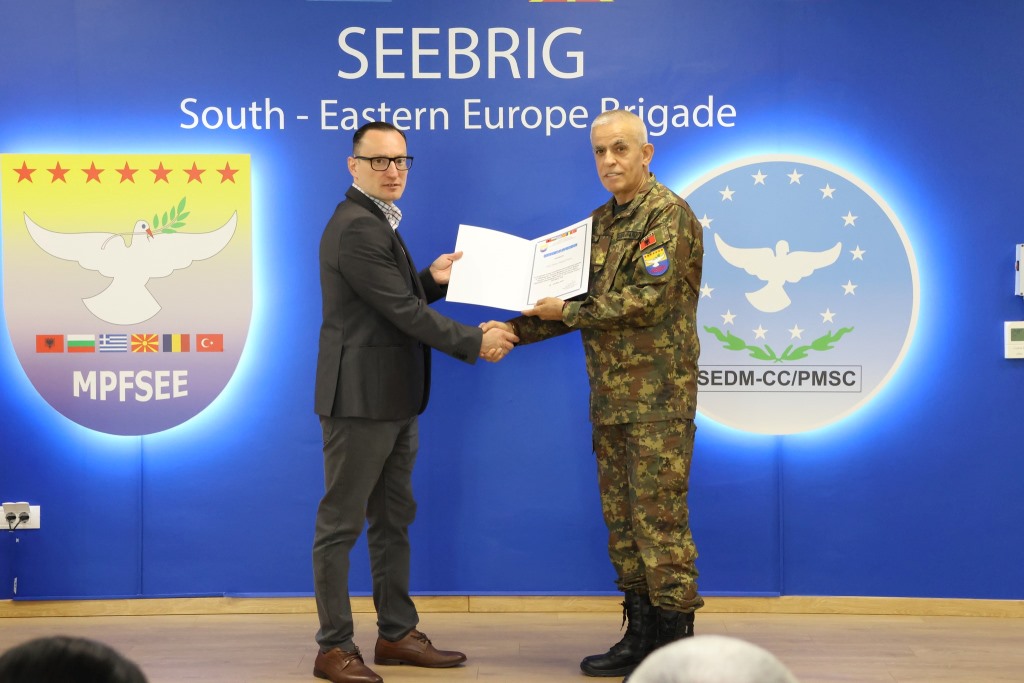
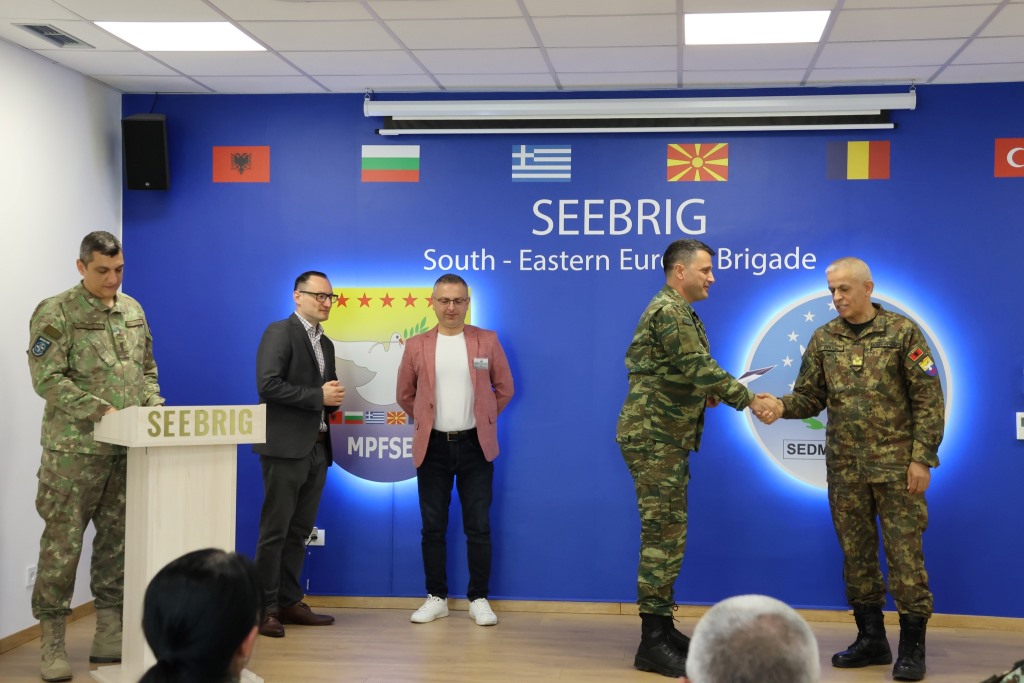
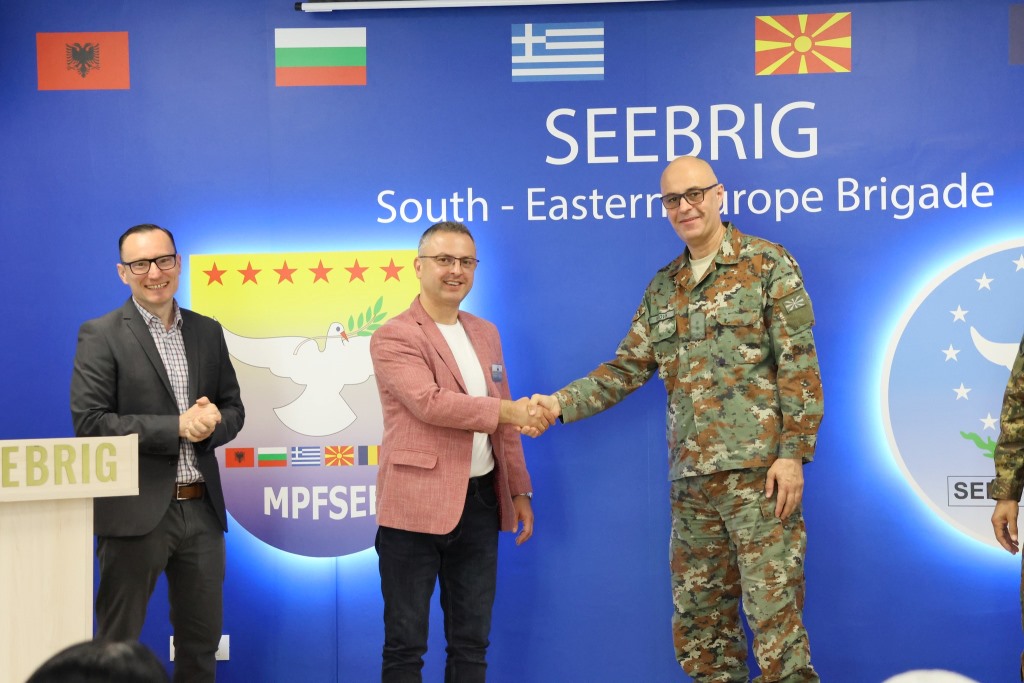
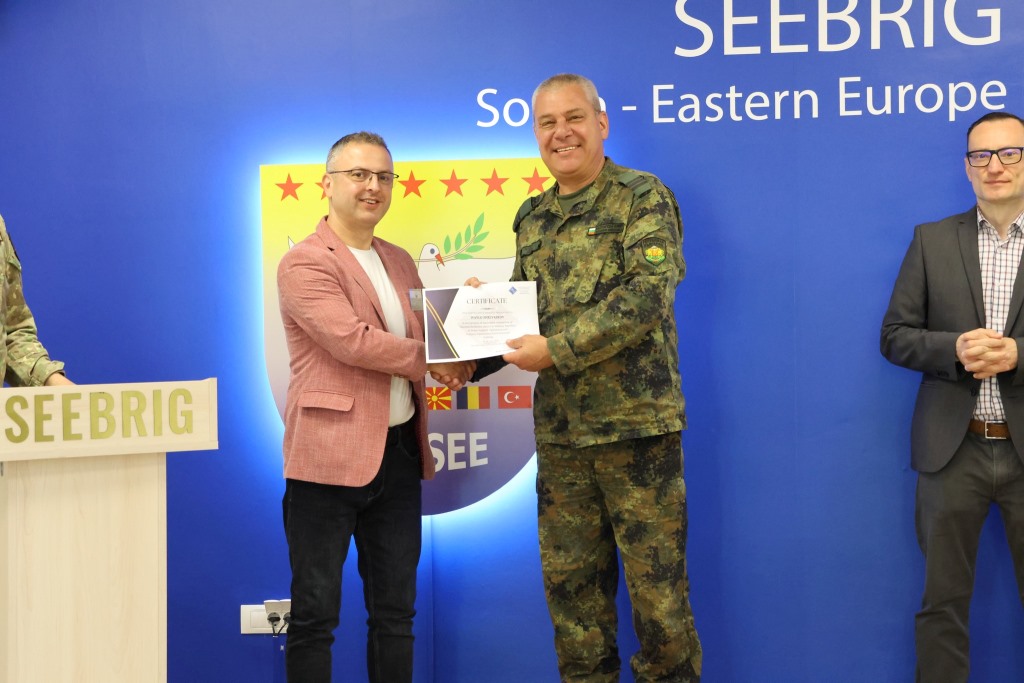
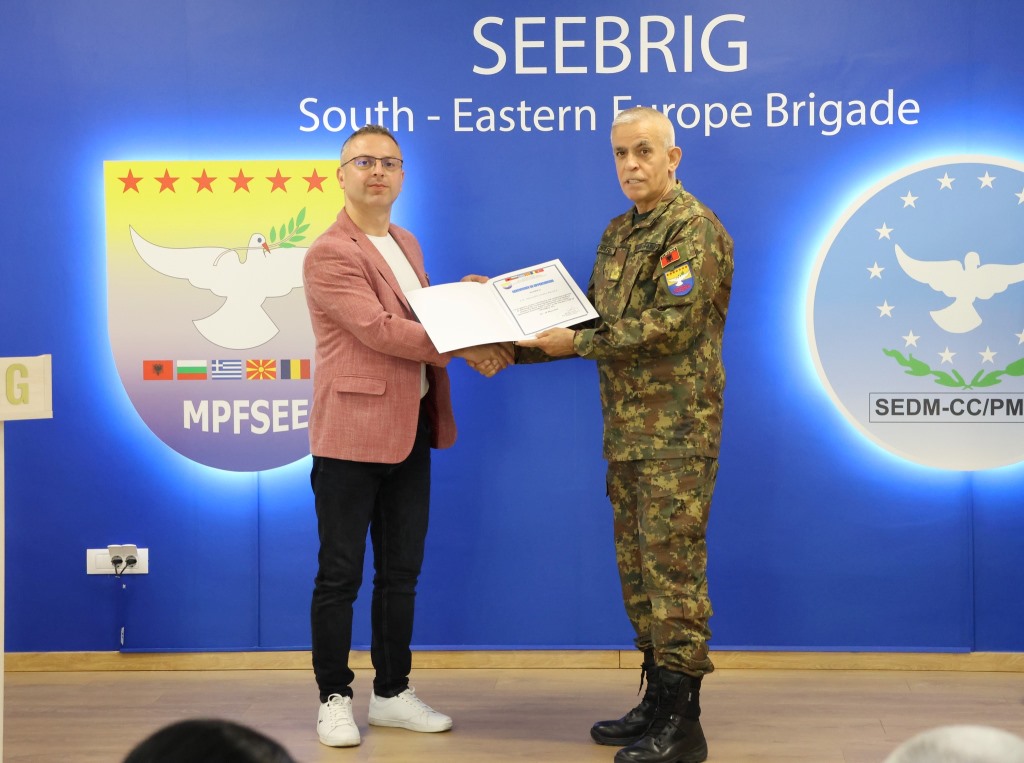
At the end of the activity the E-ARC Training Team presented to the participants the graduation certificates, expressing their appreciation for the interest and involvement all the 19 attendees manifested during the three-day training. In turn, COMSEEBRIG, BG. Bilbil BITRI, Na-1 Army, expressed his appreciation for the E-ARC team’s professionalism and support in training the SEEBRIG personnel in a very challenging domain. He presented to the E-ARC MTT members with certificates of appreciation and expressed the Brigade’s interest for deepening the cooperation in the training domain with E-ARC.